In modern Australian industrial settings, field wiring is rapidly becoming one of the most expensive segments of any automation project.
Traditional central control architectures require every single proximity sensor, limit switch, and valve actuator to have a dedicated copper cable running all the way back to the main PLC cabinet.
When a production line spans across a large facility floor, this parallel wiring method introduces massive labour overheads, heavy cable trays, and an absolute nightmare for fault-finding.
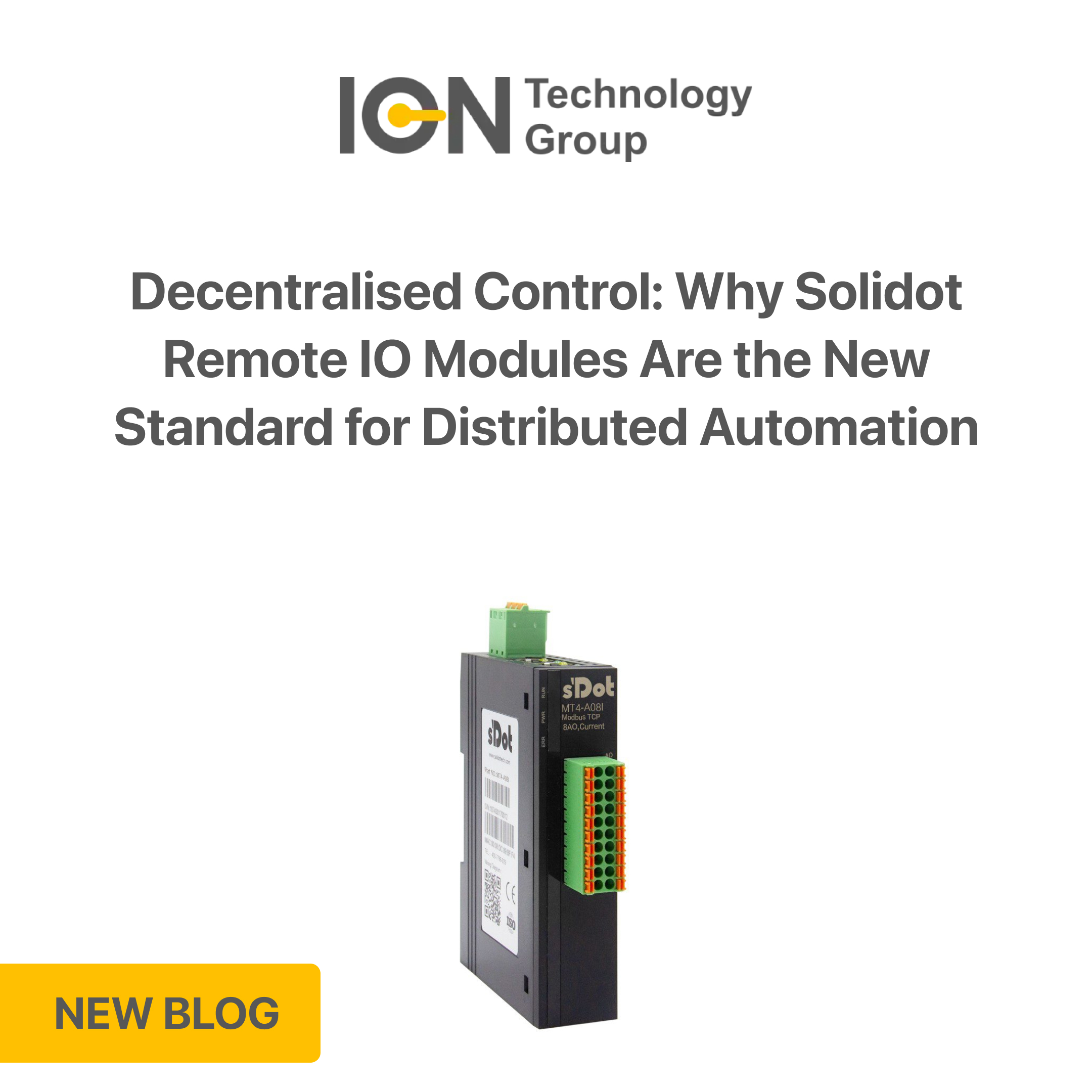
To eliminate this physical bottleneck, systems integrators and plant engineers are moving toward distributed control systems. By placing intelligence directly at the machine side using Solidot Remote IO modules, facilities can drastically simplify their field architecture and reduce deployment costs.
Slashing Installation Hours with Fieldbus Connectivity
The primary commercial advantage of Solidot Remote IO modules is the complete elimination of bulky, point-to-point field wiring looms. Instead of terminating dozens of individual cables inside your main panel, field devices are wired locally to a compact Solidot module positioned right next to the machinery.
The Solidot head station drops all of that aggregated local data onto a single industrial network cable—such as EtherCAT, Profinet, or Modbus TCP—which links back to the central PLC processor.
For electrical contractors, this single-cable approach yields immediate, practical benefits:
- Drastic Reductions in Labour: Sparkies spend significantly less time pulling heavy cables through ceiling trays, stripping insulation, and tagging terminals.
- Reduced Material Costs: Slashed copper requirements mean smaller cable trays, lighter enclosures, and a healthier project bottom line.
- Rapid Troubleshooting: If a sensor cable gets damaged, maintenance teams only have to trace a short lead back to the local Solidot module rather than parsing a massive multi-core loom traversing the entire site.
Modularity on Demand: The Solidot Slice Advantage
Industrial processes are rarely static. When an automated line needs to expand to accommodate new pneumatic valves or high-speed sensors, a fixed-I/O controller can force you into a costly hardware swap.
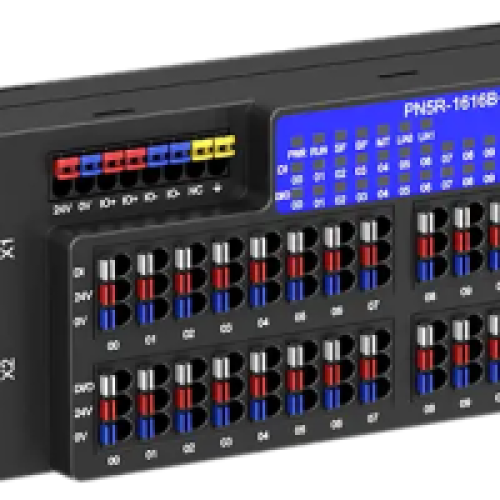
Solidot Remote IO modules are engineered with a highly flexible, slice-type modular design. This means you can customise your input and output density precisely to the task at hand:
- Seamless Signal Mixing: Solidot allows you to mix digital inputs (DI), digital outputs (DO), analogue inputs (AI), and analogue outputs (AO) on the exact same DIN rail node.
- Clip-On Scalability: If a project requires expansion down the track, a technician can simply clip an additional I/O slice onto the existing Solidot bus coupler without rewriting the baseline physical network layout.
- Natively Fluent in CODESYS: Solidot modules integrate seamlessly into open-architecture control environments. Because the I/O mapping interfaces cleanly with CODESYS, configuring distributed parameters and diagnosing field status remains a streamlined, single-software process.
The ION Verdict
Building a reliable, relationship-based B2B venture relies on introducing technical solutions that mitigate operational risk and optimise field efficiency.
When conducting proactive outreach to your CRM contacts, the mechanical reality is clear: the old way of running massive copper bundles across a plant is no longer commercially viable.
Deploying Solidot Remote IO modules modernises your automation topology, cleans up control cabinets, and ensures absolute signal integrity from the edge of the factory floor straight to the master controller.
Need specific technical advice on matching the correct Solidot head station to your facility’s primary fieldbus protocol? Contact the ION Technology Group team for a professional, reliable technical consultation.