In traditional industrial automation topologies, control system design relied on a heavily centralised architecture. Every field device—whether an inductive proximity sensor, a limit switch, or a pneumatic solenoid valve—required a dedicated copper cable running all the way back to the main PLC enclosure.
As modern production lines scale and processing facilities become more complex, this point-to-point wiring method quickly becomes unviable. The solution driving modern industrial setups is distributed automation. By strategically deploying remote i/o modules at the machine side, systems integrators can streamline control system architecture, slash physical installation overheads, and future-proof enterprise asset management.
What is Remote I/O in Distributed Automation?
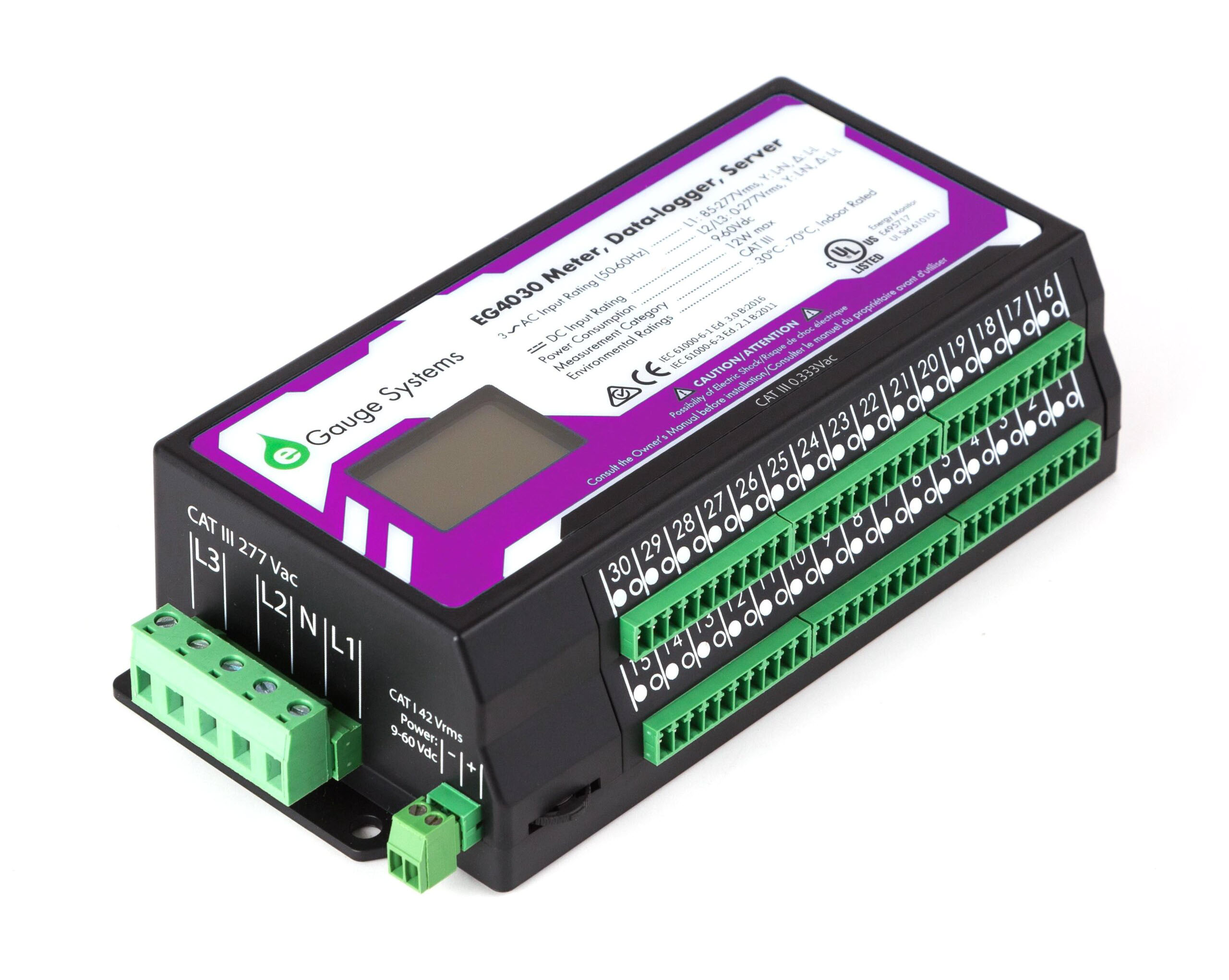
A remote I/O architecture replaces bulky, parallel copper wiring looms with a high-speed digital communications network. Instead of routing dozens of individual sensor cables back to the main control panel, field devices are terminated locally into compact, rail-mounted remote i/o modules positioned directly on the machinery.
The bus coupler or head station of the module aggregates these local signals and converts them into a single digital data stream. This stream is transmitted back to the central PLC via a single industrial network cable (such as an Ethernet or serial fieldbus link). This transition to distributed automation allows the primary controller to monitor and command thousands of field points across vast physical distances without requiring massive physical terminal strips in the primary enclosure.
Key Selection Factors for Systems Integrators
Selecting the correct remote I/O hardware is a critical step during the engineering design phase. To guarantee long-term network stability and fast cycle times, several key parameters must be evaluated:
- Communication Protocol Dynamics
Your distributed network is only as fast as the language it speaks. The head station must match the network architecture of your primary controller. The most common industrial protocols include:
- EtherCAT: Optimised for ultra-high-speed synchronisation, motion control, and deterministic performance.
- Profinet: Ideal for high-data-throughput, factory-wide automation loops with heavy diagnostic requirements.
- Modbus TCP: A highly reliable, universal, open-standard protocol favored for its straightforward setup and widespread device compatibility.
- Physical Form Factor and Spatial Optimisation
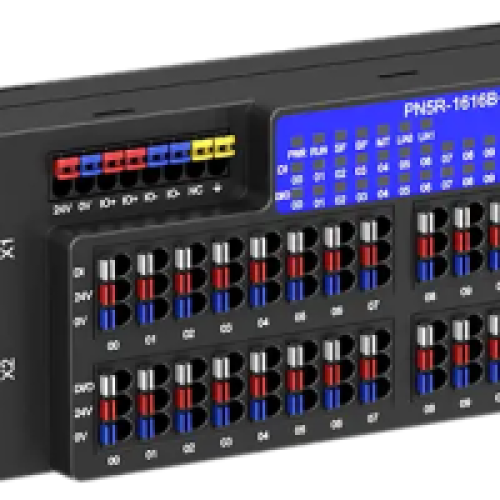
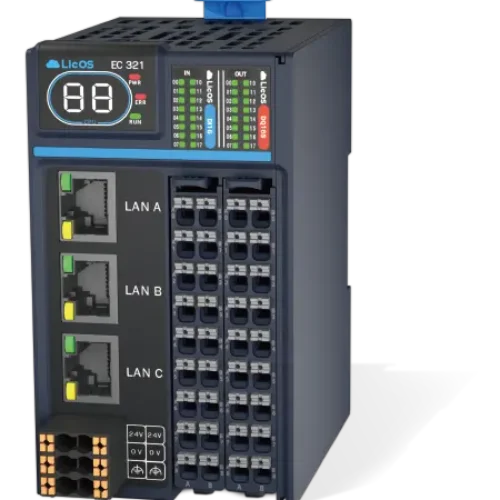
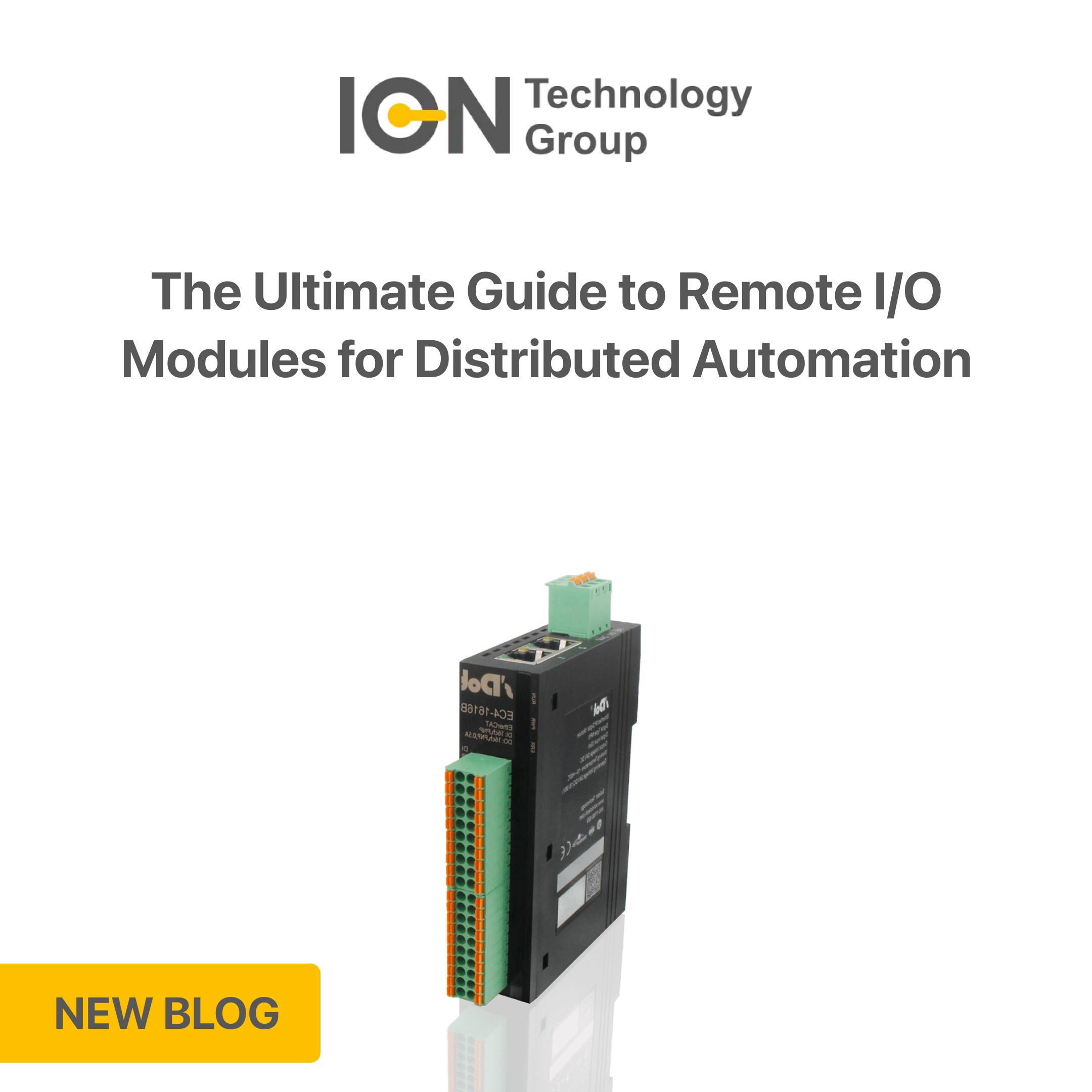
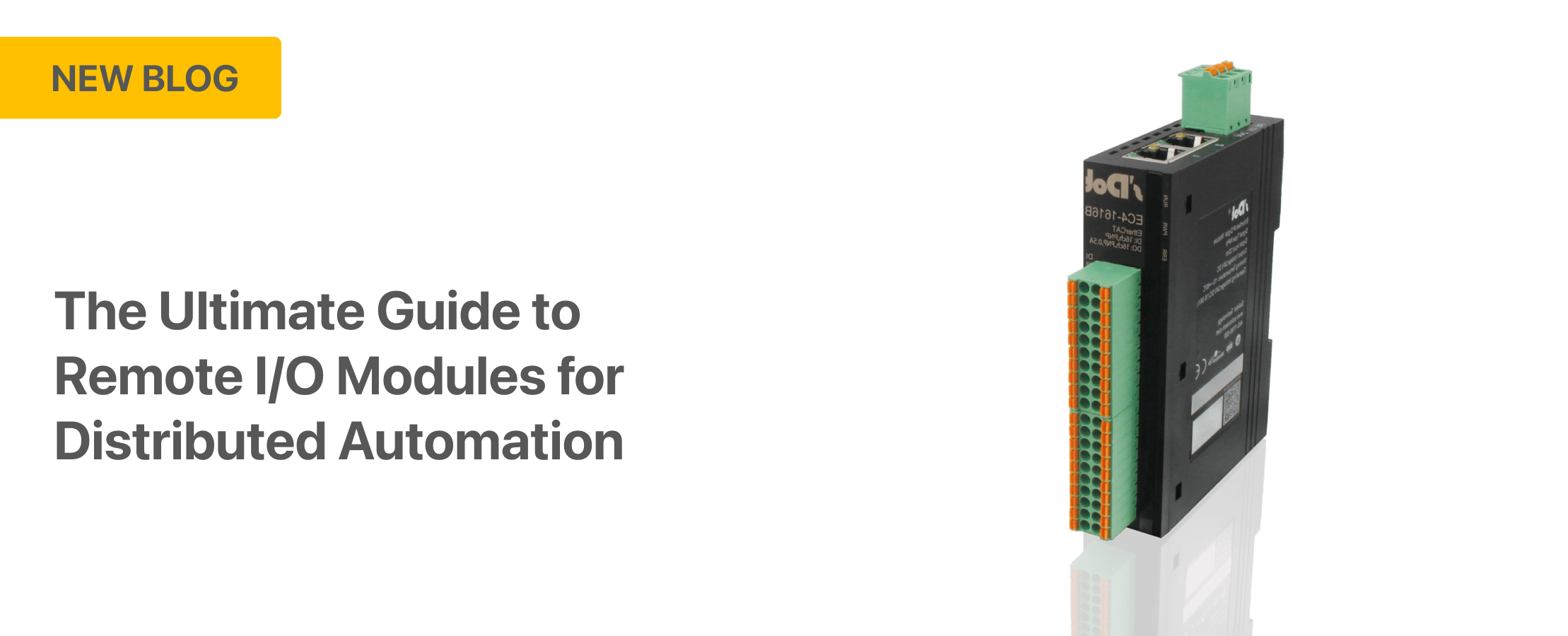
Control cabinets on the factory floor are frequently space-constrained. Modern remote I/O modules utilise a modular slice design. These slice systems feature an ultra-slim profile, allowing engineers to clip digital input, analogue output, or specialty function modules onto a single bus coupler. This high-density architecture frees up vital DIN rail space for adjacent motor starters and safety relays.
- Diagnostic Capabilities and Channel Isolation
When a field sensor shorts out or an actuator fails on a busy production line, downtime costs accumulate rapidly. High-tier remote I/O modules provide advanced channel-level diagnostics. Status LEDs on the module faceplate and explicit network alarm codes instantly alert maintenance teams to the exact channel experiencing an open circuit or short, reducing Mean Time to Repair (MTTR).
Architectural Comparison: Centralised vs. Distributed Control
The shift away from legacy centralised wiring structures yields immediate material and operational benefits across industrial environments:
System Characteristic | Centralised Wiring Architecture | Distributed Remote I/O System |
Copper Cable Volume | Exceptionally High | Drastically Reduced |
Enclosure Dimensions | Bulky, overcrowded panels | Slimline, compact local boxes |
Commissioning Time | Days (Tedious point-to-point) | Hours (Plug-and-play network) |
Diagnostic Precision | Limited to basic panel testing | Detailed down to channel-level |
Scalability Path | Complex (Requires panel rework) | Simple (Clip-on extra slices) |
Seamless Integration into Open Ecosystems
For automated frameworks managing dynamic industrial processes, choosing hardware that interfaces smoothly with open programming environments is vital. Modern remote I/O modules map cleanly into software platforms like CODESYS.
Because CODESYS handles bus configuration, logic execution, and variable mapping within a single environment, integrating distributed nodes becomes a streamlined task. Engineers can configure parameters, force I/O channels for field testing, and diagnose communication status without having to toggle between different software packages.
Summary and Next Steps
Implementing remote i/o modules across your processing facility or machinery build represents a fundamental step toward Industry 4.0 readiness. It eliminates cable clutter, improves signal integrity by digitising data closer to the source, and provides an easily scalable foundation for future operational expansion.
Ready to optimise your system layout and select the ideal network architecture? Get in touch with the ION Technology Group today!