In modern industrial machinery builds and factory automation systems across Australia, control panel design is undergoing a massive shift. Historically, engineers built control panel frameworks by combining discrete components: a central Programmable Logic Controller (PLC) rack, a standalone Human-Machine Interface (HMI) screen mounted to the enclosure door, and an external communication gateway module to handle network data.
While this traditional multi-vendor approach was the industry standard for decades, it introduces significant real-world engineering liabilities. Managing separate power supplies, cutting multiple holes in enclosure doors, and configuring communication protocols between different brands of screens and processors creates unnecessary points of failure.
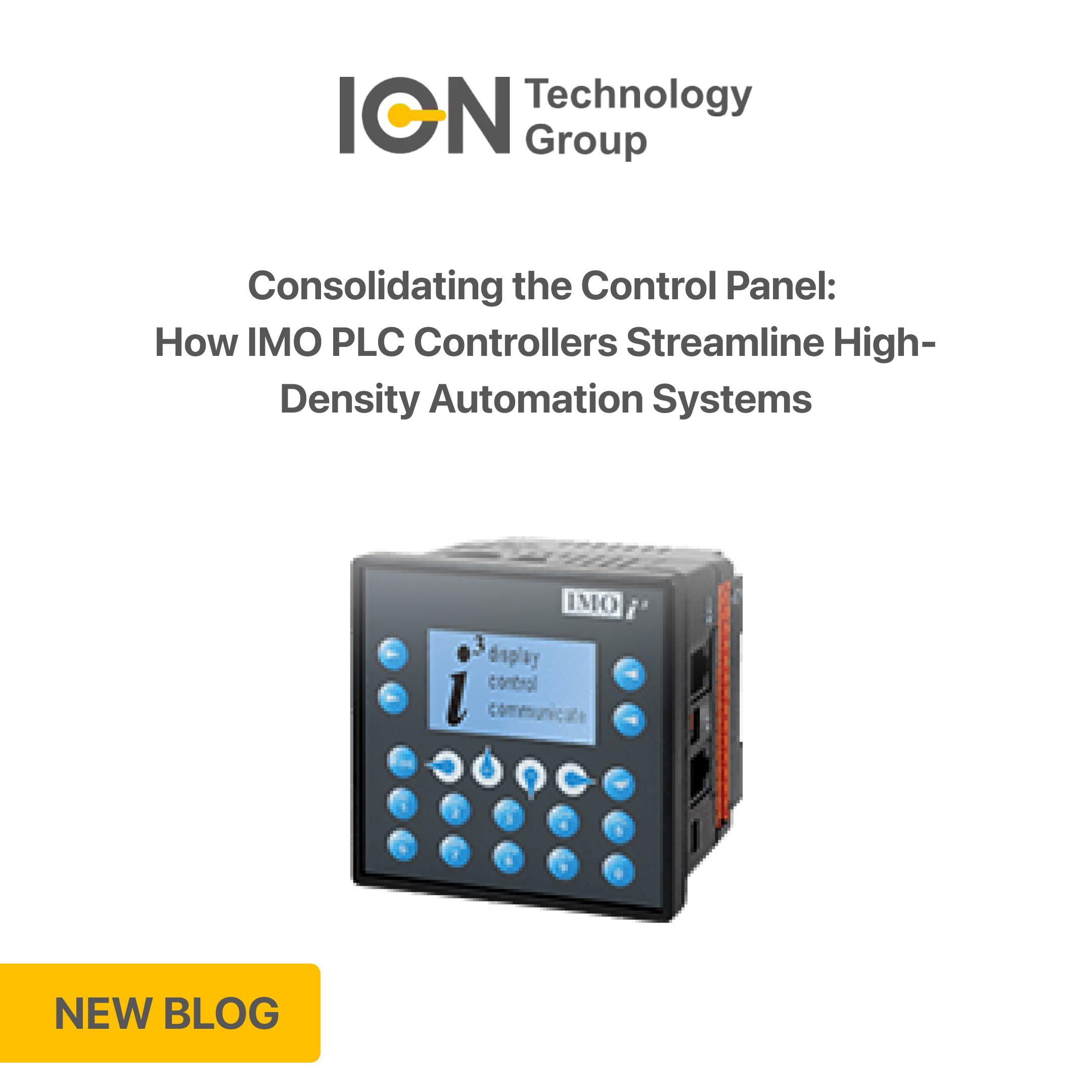
To eliminate this complexity, systems integrators are moving toward hardware consolidation. Specifying integrated IMO PLC Controllers—specifically their advanced range of All-in-One Controllers—has become the preferred design path to clean up enclosures, minimise communication lag, and reduce total system integration costs.
The Hidden Cost of Multi-Vendor Hardware Architecture
When an automated production line or an industrial packaging machine drops offline, every minute of troubleshooting represents a heavy financial loss for a facility. In a traditional split architecture (separate PLC and separate HMI), diagnosing a sudden failure frequently becomes a guessing game:
- Communication Bottlenecks: Data must constantly travel across a serial or Ethernet cable linking the PLC to the HMI screen. If this communication bus experiences electromagnetic interference (EMI) from adjacent variable speed drives, data packets drop, causing slow screen refreshes or total freeze-ups.
- Complex Driver Mapping: Programmers must manually build and maintain separate tag databases in two completely different software environments, mapping the registers of the controller to the variables of the screen. A single mismatch during a field update can break the entire operator interface.
- Cabinet Real Estate Consumption: Separate units require separate mounting footprints, larger DIN rail allocations, and extra terminal strips, forcing machine builders into buying larger, more expensive steel enclosures.
Why IMO All-in-One Controllers Are the Ideal Technical Solution
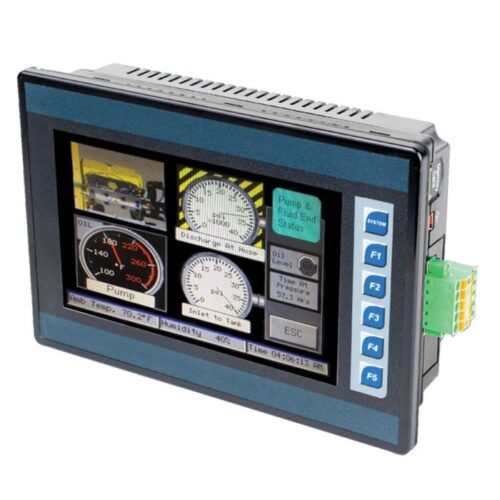
IMO PLC Controllers overcome these integration hurdles by embedding a highly powerful, dedicated PLC logic engine directly behind a ruggedised industrial touchscreen display. This true “All-in-One” architecture yields immediate engineering advantages:
- Zero-Lag Internal Backplane Communication
Because the PLC processor and the HMI display share the same physical circuit board and processor architecture, external communication cables are completely eliminated. Data transfer occurs natively at the internal backplane level. This ensures instantaneous screen updates, hyper-responsive alarm monitoring, and absolute immunity to external electrical noise.
- Unified Software Engineering
IMO’s consolidated ecosystem allows engineers to program the core control logic, configure communication fieldbuses, and design the complete graphical HMI user interface within a single, unified software package. This single-database architecture removes the tedious process of cross-mapping tags, cutting software development and commissioning times in half.
- High-Density Local and Remote I/O Expandability
Despite their incredibly compact physical profile, these units do not compromise on technical capabilities. They feature built-in, highly dense digital and analogue I/O options right on the rear casing. If a project requires expansion across a distributed network, the onboard ports allow for seamless connection to remote expansion slices, mapping the field sensors straight into the central application logic.
Architectural Comparison: Split Architecture vs. IMO All-in-One
Consolidating your control layout into a single, high-performance node yields immediate spatial and financial benefits
Engineering Parameter | Legacy Split-Unit Design | IMO All-in-One Controller |
Enclosure Door Cutouts | Multiple (HMI, meters, lights) | Single, standardised opening |
Software Environments | Multi-vendor (Separate databases) | Single, unified software space |
Data Latency | Dependent on network cables | Sub-millisecond internal link |
Wiring Complexity | High (Point-to-point looms) | Minimal (Direct I/O terminations) |
Component Reliability | Multiple potential fail points | Single, highly integrated unit |
The ION Verdict
Building a dependable, repeat-business B2B venture with automation buyers depends entirely on introducing technical solutions that mitigate operational risk and lower assembly overheads. When conducting proactive outreach to your commercial networks or presenting options to systems integrators, the message is simple: clutter is a cost. Upgrading to an integrated IMO PLC Controller platform modernises your automation topology, clears cable chaos out of your enclosures, and ensures absolute data integrity from day one.
Need specific technical advice on selecting the ideal screen size and onboard I/O density for your next machinery build? Contact the ION Technology Group team for a professional technical consultation.